
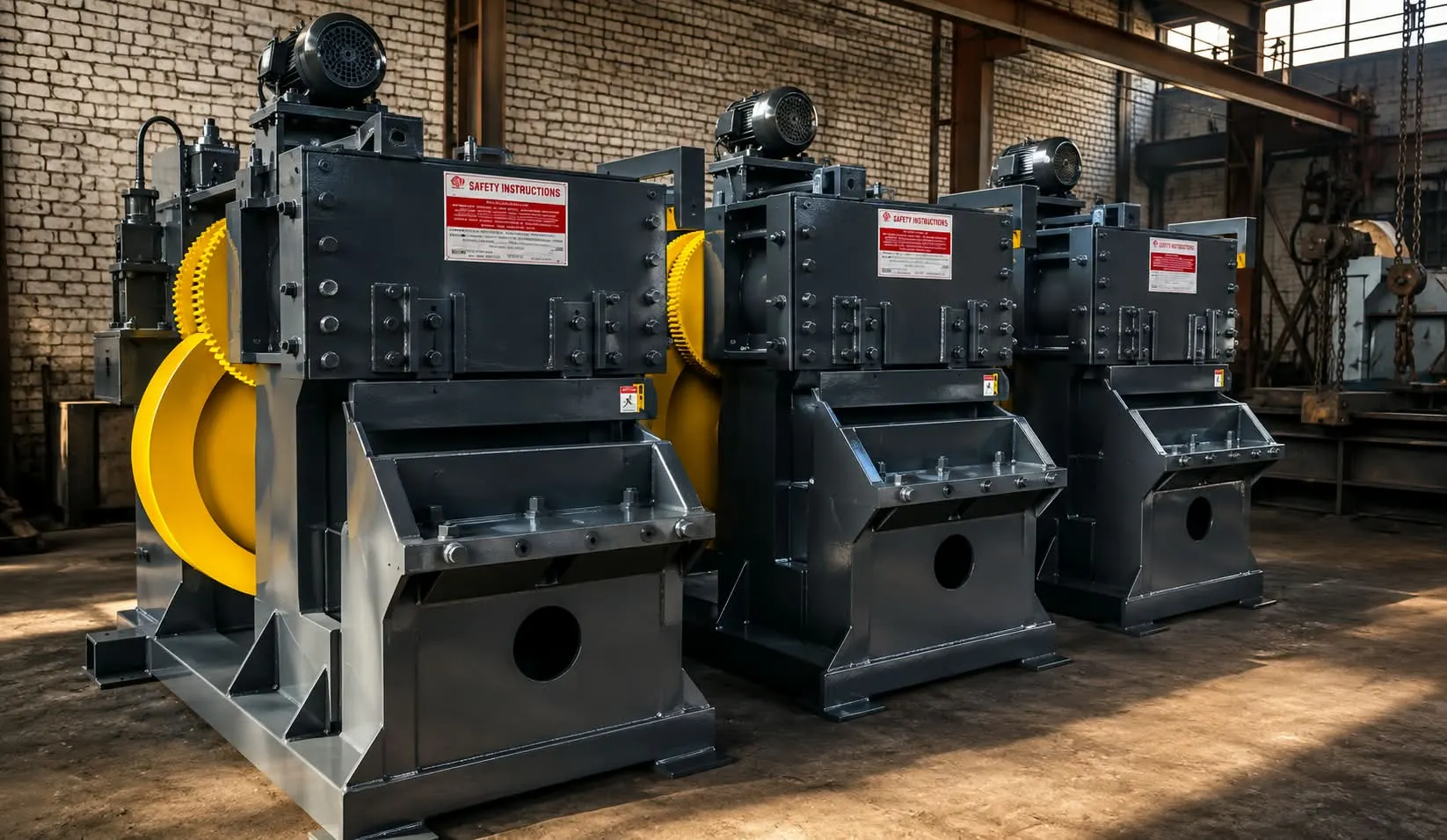
When a side ram and ejection sequence justify a triple-action press versus a double-action machine.
What ‘action’ means here
On Narshinga scrap presses, double-action typically means main compression plus a second ram (often lid or side) to improve density. Triple-action adds a coordinated ejection (or third-direction) sequence so the bale is formed and discharged in one automatic cycle.
When double-action is enough
Lighter mixed metal, some non-ferrous batches, and yards that already present well-cut scrap often run double-action or double-compression machines. They are not a downgrade; they match a simpler feed.
When triple-action is specified
Mixed shapes, auto body sheet, and mill-oriented HMS that must leave as a uniform cube are the usual reasons we discuss triple-action or triple-compression. The extra ram and ejection sequence cost more steel and hydraulics — only specify them if the bale specification needs it.
Related machines
- Double Action Baling Press MachineTwin-cylinder hydraulic baler that compresses and ejects loose scrap and light-gauge material into stackable bales, built for high-throughput yards.
- Triple Action Baling Press MachineHeavy-duty triple-action hydraulic press that compacts metal scrap, turnings, and structural offcuts into dense, easy-to-handle bales in a single automatic cycle.
- Double Compression Hydraulic Scrap Baler MachineTwin-stage compression baler that pre-compacts then final-presses scrap for denser bales than a single-stage press of the same tonnage.
- Triple Compression Hydraulic Scrap Baler MachineThree-stage compression baler that maximises bale density for scrap, giving the highest weight-to-volume ratio in our baler range.
Related applications
Further reading
It is designed to produce a more uniform bale from mixed shapes. Density still depends on material and fill. We will not claim a percentage improvement without your scrap and a confirmed model.