
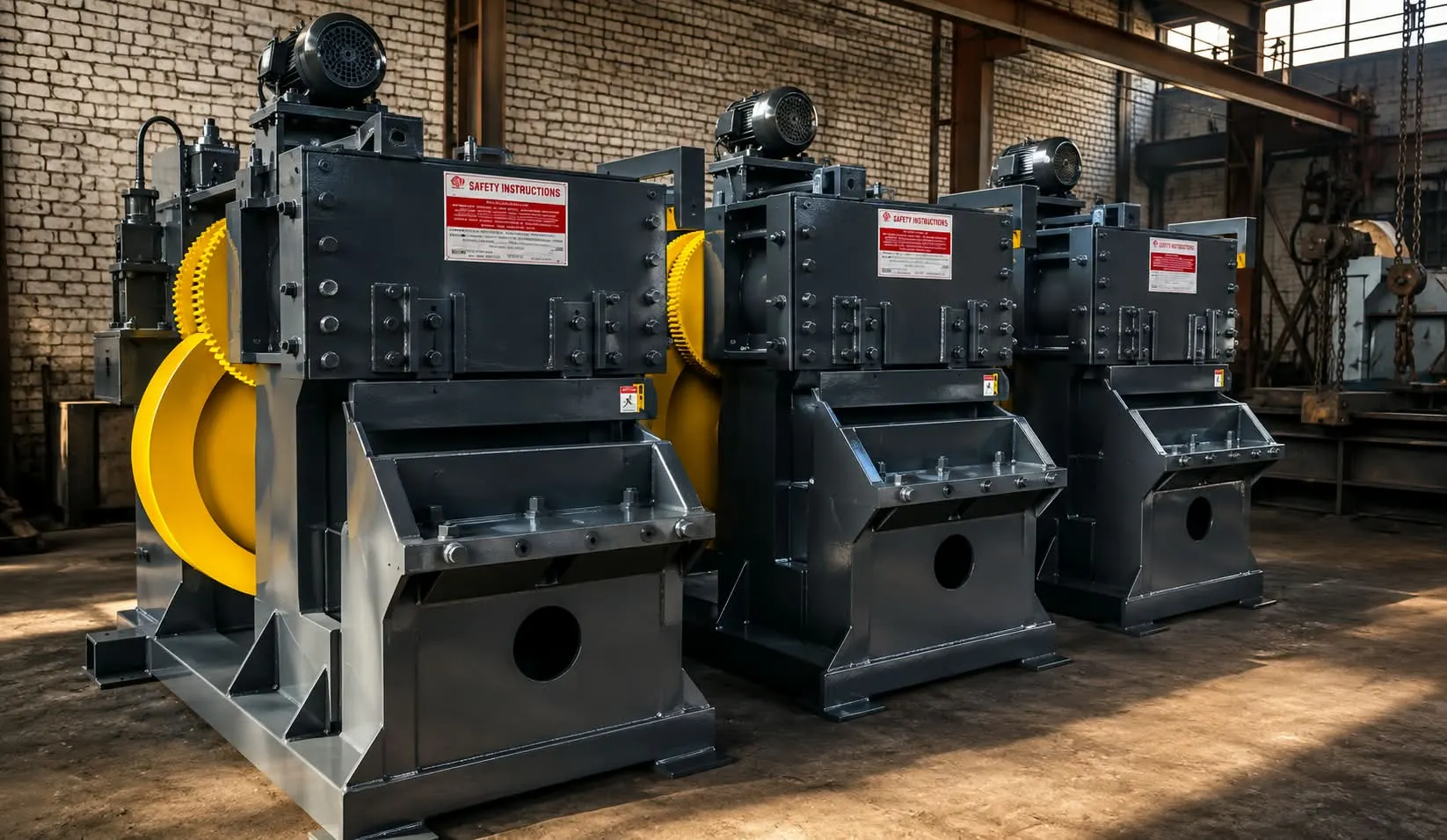
The hydraulic cycle from feed to ejection, and how single-box, double-box, and triple-action layouts differ.
Power pack, cylinder, chamber
A hydraulic power pack drives one or more cylinders. Oil pressure (listed on product pages in kg/cm²) and cylinder bore set the force at the ram. The chamber contains the material while that force is applied.
A typical cycle
Material is loaded through a feed opening or door. The main ram compresses. On triple-action machines a side ram and ejection sequence finish the bale. The door is released and the bale is ejected or tied. Cycle time on our data sheets is a band — actual time depends on fill, material, and whether the machine is semi-automatic or PLC-controlled.
Why layouts differ
Vertical machines load from the top and suit smaller footprints. Horizontal machines accept conveyor feed. Double-box and twin-chamber designs keep one chamber working while the other is unloaded. None of these layouts is universally ‘better’; they match different feeds.
Related machines
- Triple Action Baling Press MachineHeavy-duty triple-action hydraulic press that compacts metal scrap, turnings, and structural offcuts into dense, easy-to-handle bales in a single automatic cycle.
- Double Box Hydraulic Baling Press MachineTwin-chamber baler that runs two independent pressing boxes off one power pack, doubling throughput without doubling floor space.
- Horizontal Hydraulic Baling Press MachineFully automatic horizontal baling press with PLC-controlled auto-door and cycle sequencing for continuous, high-throughput operation.
Related applications
Further reading
No. Tonnes per hour also depend on how full the chamber is, operator pacing, and tying. Treat cycle time as a machine characteristic, then validate throughput with engineering.