
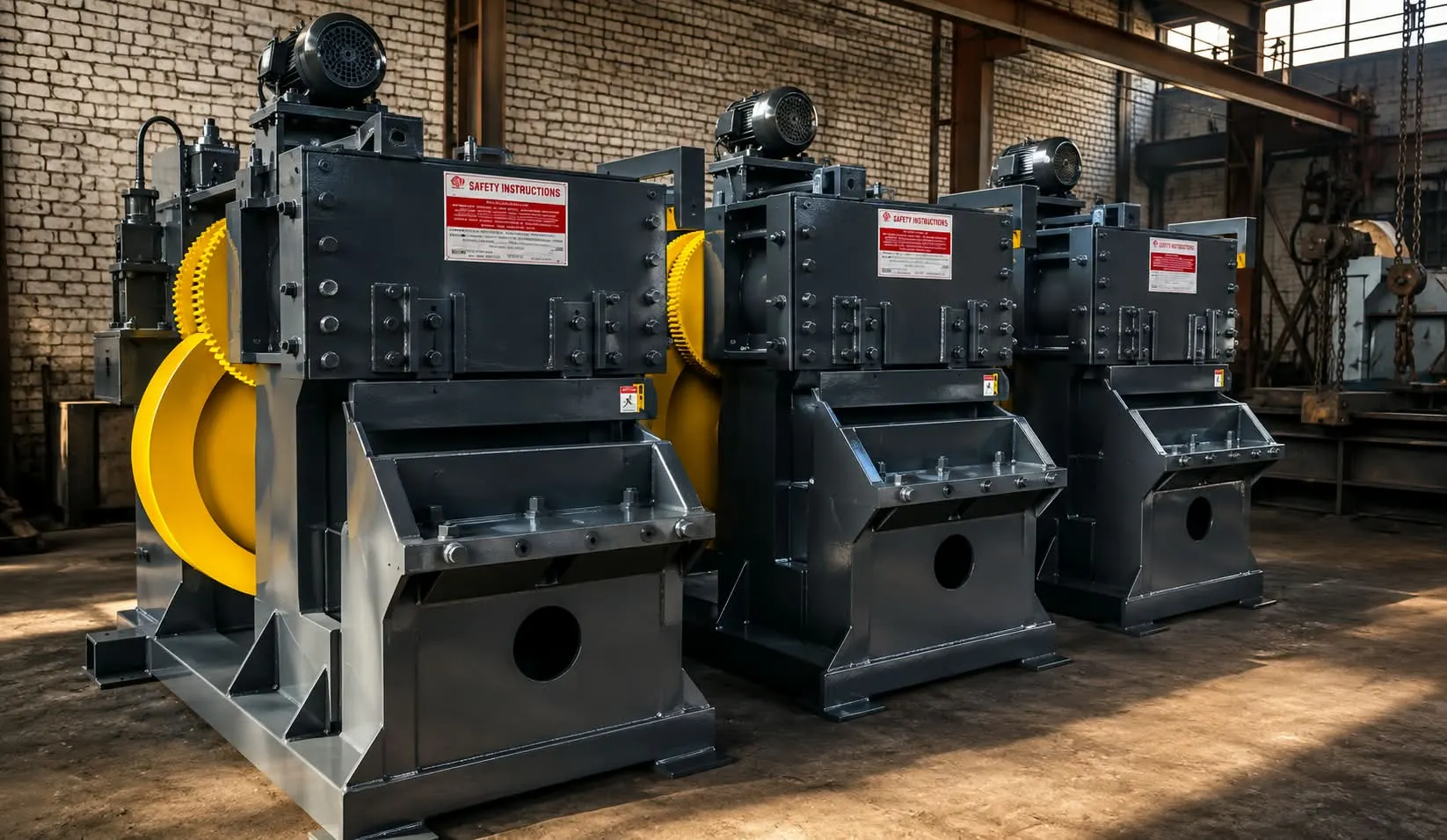
How to brief a manufacturer on material, throughput, bale size, automation, and site constraints before you order a hydraulic baling press.
Start with the material, not the tonnage number
Pressing force only means something after you know what you are compressing. MS sheet, HMS, PET bottles, OCC, and cotton waste load a chamber differently. Send photos, an approximate daily quantity, and whether the stream is mixed or already sorted.
If the material is oversized structural steel, you likely need a shear in front of the baler. Forcing that duty into a light chamber is a common specification error.
Bale size is a commercial constraint
Mills, traders, and export containers often dictate bale dimensions. Ask the buyer before you freeze chamber size. Our product pages list ranges, not a promise that every model makes every size.
Automation follows labour and feed
Manual or semi-automatic machines suit lower volume and operators at the chamber. PLC and automatic door or twin-chamber machines suit conveyor or hopper feed and longer shifts. See the automatic vs semi-automatic comparison for the trade-offs we actually manufacture.
Site, power, and after-sales
Note floor space, crane access, 415 V three-phase availability (or the export voltage you need), and whether you want installation, training, and AMC from the factory. Narshinga manufactures in India and supports Pan India delivery plus export documentation — lead times on product pages are typical bands, not a contract until confirmed on the order.
Related machines
- Triple Action Baling Press MachineHeavy-duty triple-action hydraulic press that compacts metal scrap, turnings, and structural offcuts into dense, easy-to-handle bales in a single automatic cycle.
- Horizontal Hydraulic Baling Press MachineFully automatic horizontal baling press with PLC-controlled auto-door and cycle sequencing for continuous, high-throughput operation.
- Vertical Hydraulic Baling Press MachineUpstroke vertical baler that presses material upward into a top-mounted chamber, a compact standard for small-to-mid volume balers.
Related applications
- Metal Scrap BalingLoose metal scrap takes up yard space, is expensive to transport, and is difficult to charge into a furnace in an uncontrolled shape.
- Plastic and PET BalingEmpty bottles and film are high volume, low weight, and expensive to store or export loose.
- Paper BalingLoose paper fills cages and trailers long before it hits a useful shipping weight.
Further reading
You can enquire with a tonnage in mind, but we still confirm material, bale size, and feed method. Two 250-ton machines can be wrong for two different scraps.