
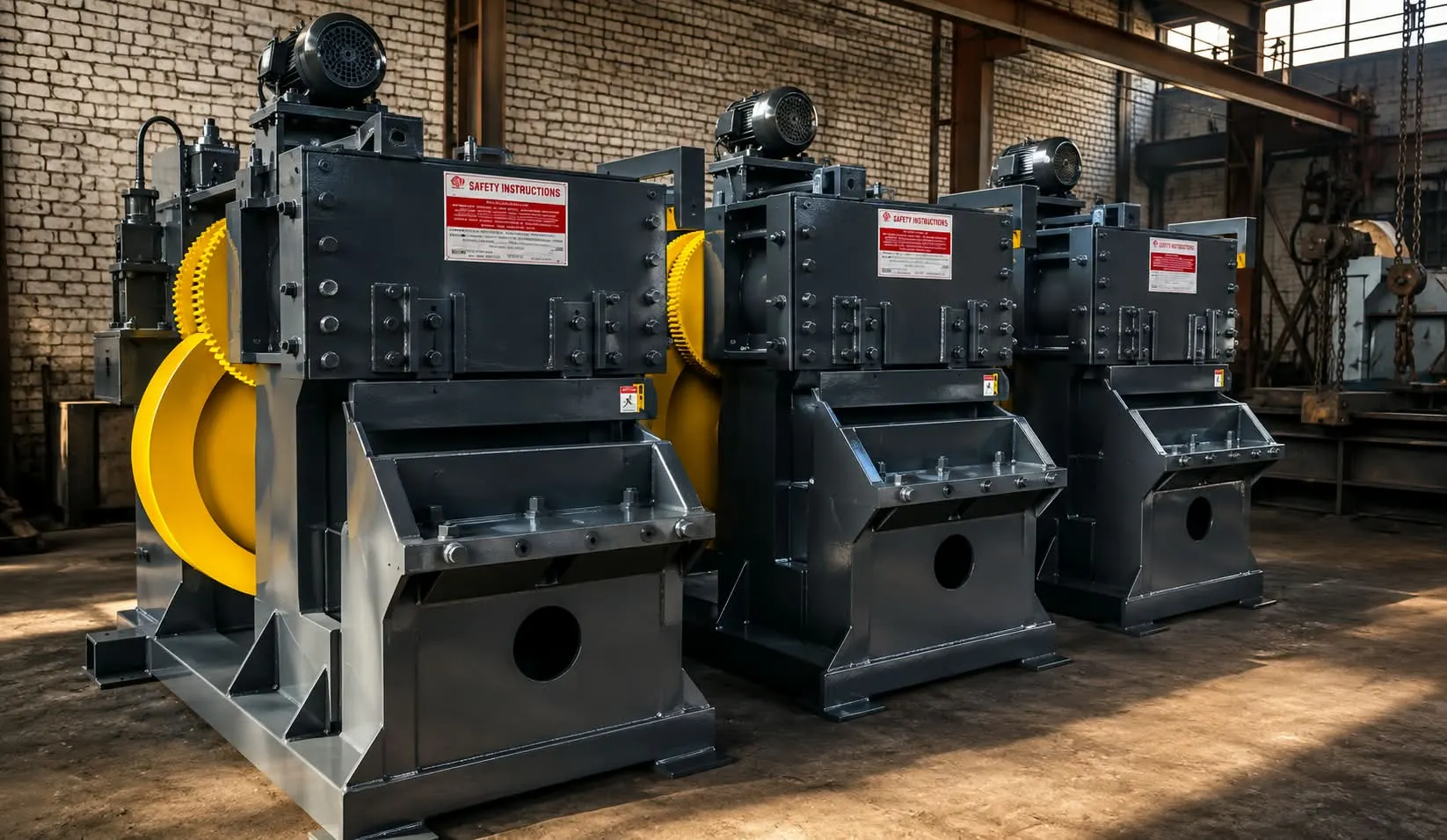
PLC door locking and ejection versus a manually latched door — labour, safety, and when each is justified.
Semi-automatic
The hydraulic press cycle runs with operator involvement at the door or latch. Suitable when volume is moderate and an operator is already at the machine. Several NSG horizontal models are built this way with a manually latched door.
Automatic / PLC
Door locking, pressing, and ejection are sequenced by the control panel. Used with hopper or conveyor feed and multi-shift operation. Automatic vertical and fully automatic horizontal machines in our range are built for that duty.
Safety is not optional on either
Guarding, interlocks, and emergency stops are specified on both. Automation reduces how often an operator reaches into the cycle; it does not remove the need for training and lockout procedures.
Related machines
- Automatic Vertical Hydraulic Baling Press MachinePLC-controlled vertical baler with automatic door and ejection sequencing for continuous conveyor-fed operation.
- Horizontal Hydraulic Baling Press MachineFully automatic horizontal baling press with PLC-controlled auto-door and cycle sequencing for continuous, high-throughput operation.
- Horizontal Hydraulic Baling Press Machine (Semi-Automatic Type)Mid-range horizontal baling press with a manually latched door, sitting between our compact semi-automatic baler and the full PLC auto-door line.
- Semi-Automatic Horizontal Hydraulic Baler MachineOperator-fed horizontal baler with a manually latched chamber door, built for yards that want hydraulic pressing without full automation cost.
Related applications
- Plastic and PET BalingEmpty bottles and film are high volume, low weight, and expensive to store or export loose.
- Paper BalingLoose paper fills cages and trailers long before it hits a useful shipping weight.
- Cardboard and Carton BalingEmpty cartons consume warehouse space and make reverse-logistics expensive.
Further reading
It removes latch time and can run from a hopper. Throughput still depends on how fast material arrives. Semi-automatic is not ‘slow’ if the bottleneck is the feed, not the door.